Milestones of Success: Difference between revisions
No edit summary |
No edit summary |
||
| Line 3: | Line 3: | ||
<gallery mode="traditional" perrow=2 widths=360 px heights= 360 px> | <gallery mode="traditional" perrow=2 widths=360 px heights= 360 px> | ||
File: Foto_01_01_1906_Entstaeubungspumpe.jpg|''1906 Siemens dedusting pump'' <br> <br> '''Tackling the dust''' <br> Shortly after the turn of the century, in 1906, Siemens launches its first vacuum cleaner on the market when it introduces the so-called dedusting pump. <br> <br> | File: Foto_01_01_1906_Entstaeubungspumpe.jpg|''1906 Siemens dedusting pump'' <br> <br> '''Tackling the dust''' <br> Shortly after the turn of the century, in 1906, Siemens launches its first vacuum cleaner on the market when it introduces the so-called dedusting pump. <br> <br> | ||
File: | File: 1933 Bosch Kuehlschrank rbosch 05871.jpg|''1933 Bosch refrigerator'' <br> <br> '''The first refrigerator: a round affair''' <br> In 1933, Bosch introduces the first electric refrigerator. It has a round shape and a capacity of 60 liters, and sells for 365 Reichsmark. <br> <br> | ||
File: Foto 02 1956 ca Constructa Werkhalle.jpg|''Constructa factory hall, around 1956.'' <br> <br> '''Keeping an eye on the laundry''' <br> In 1951, Constructa introduces the first fully automatic washing machine to the market. Designed by Peter Pfenningsberg, its most prominent feature is its porthole. By 1955, its successor model, the Constructa Deluxe 100, already has an 80 percent market share – and this in competition with 30 other suppliers. <br> <br> | File: Foto 02 1956 ca Constructa Werkhalle.jpg|''Constructa factory hall, around 1956.'' <br> <br> '''Keeping an eye on the laundry''' <br> In 1951, Constructa introduces the first fully automatic washing machine to the market. Designed by Peter Pfenningsberg, its most prominent feature is its porthole. By 1955, its successor model, the Constructa Deluxe 100, already has an 80 percent market share – and this in competition with 30 other suppliers. <br> <br> | ||
File: 1952 Küchenmaschine rbosch Nr.6181.jpg|''1952 The Bosch food processor Neuzeit I (“Modern Times I”)'' <br> <br> '''All-rounder in the kitchen''' <br> In 1952, Bosch launches its first electrically operated universal food processor, the Neuzeit I. <br> <br> | File: 1952 Küchenmaschine rbosch Nr.6181.jpg|''1952 The Bosch food processor Neuzeit I (“Modern Times I”)'' <br> <br> '''All-rounder in the kitchen''' <br> In 1952, Bosch launches its first electrically operated universal food processor, the Neuzeit I. <br> <br> | ||
Revision as of 16:50, 10 March 2017
BSH[1] and its predecessor brands have always been characterized by technical innovations. The first electric vacuum cleaners, refrigerators and modern automatic washing machines were technological milestones on the company’s road to success. Every time something new happened in the field of home appliances, the BSH brands were right there at the cutting edge. And through it all, the focus has always been on one clear objective – making the lives of people, especially housewives, easier. Modern appliances provided time and energy for other things than housework. BSH home appliances became a driving force for not only technical but also social development, and have remained so to this day. An overview.
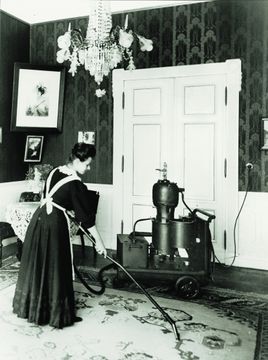
1906 Siemens dedusting pump
Tackling the dust
Shortly after the turn of the century, in 1906, Siemens launches its first vacuum cleaner on the market when it introduces the so-called dedusting pump.
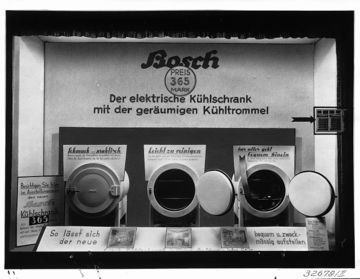
1933 Bosch refrigerator
The first refrigerator: a round affair
In 1933, Bosch introduces the first electric refrigerator. It has a round shape and a capacity of 60 liters, and sells for 365 Reichsmark.
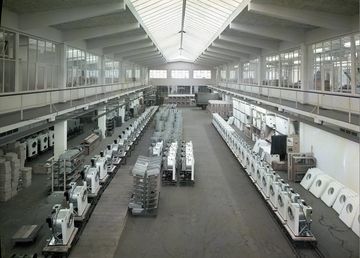
Constructa factory hall, around 1956.
Keeping an eye on the laundry
In 1951, Constructa introduces the first fully automatic washing machine to the market. Designed by Peter Pfenningsberg, its most prominent feature is its porthole. By 1955, its successor model, the Constructa Deluxe 100, already has an 80 percent market share – and this in competition with 30 other suppliers.
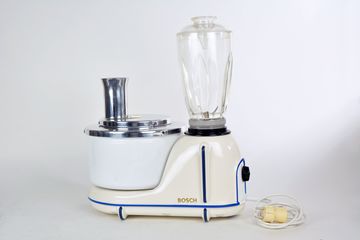
1952 The Bosch food processor Neuzeit I (“Modern Times I”)
All-rounder in the kitchen
In 1952, Bosch launches its first electrically operated universal food processor, the Neuzeit I.
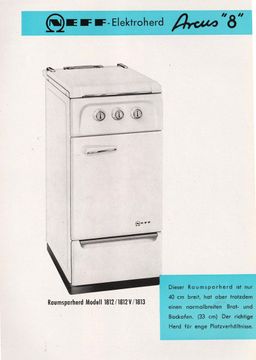
From 1952 Neff Arcus electric cooker
An arc of triumph for Neff
Neff achieves its breakthrough in 1952 with the modern Arcus electric cooker. Technical innovations and contemporary design win over more than a quarter of a million buyers through to 1956.
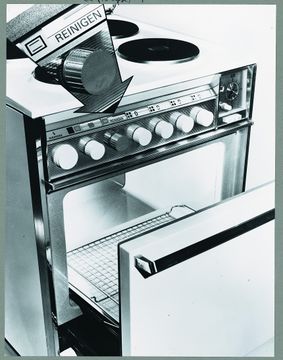
From 1970 The Siemens Meisterkoch (Master Chef) series
A stove for master chefs
In 1970, Siemens introduces the Meisterkoch series, which blows the market away with an outstanding range of operations and flexible function. In 1981, the Meisterkoch universal stove is launched. This is a built-in cooker that owes its success to a combination of top and bottom heating, convection, grill, microwave and self-cleaning by pyrolysis. An oven carriage facilitates access to baked goods.
1970 Neff Circo Therm
A lot of hot air
This multifunction oven with its CircoTherm hot air system and glass front provides insight in the kitchen. CircoTherm still stands for high-quality Neff ovens to this day.
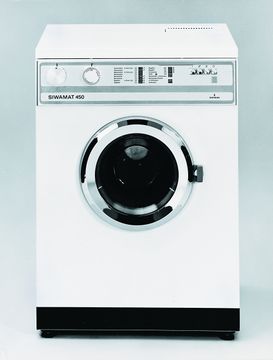
1972 Fully automatic washing machines and dryers
Washing machines learn to dry
The successful SIWAMAT series continues to grow throughout the 1970s. In 1970, the SIWAMAT 450 automatic washing machine with its numerous programs and functions is added to the premium class. This is followed by the appearance of the first automatic washer-dryer in 1972. The front loaders SIWAMAT V472 with 800 rpm and the SIWAMAT 484 with 1000 rpm appeared in 1979. At the beginning of the 1980s, the first fully electronic washing machine, the SIWAMAT 870 electronic, selects the most economical program itself and displays the progress of the washing process.
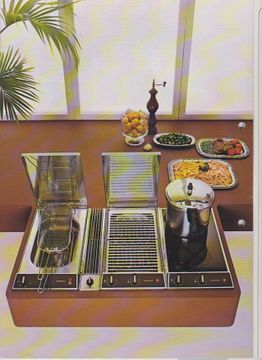
1976 Downdraft ventilation from Gaggenau
Downdraft ventilation
As part of the Vario kitchen series, Gaggenau launches an innovation on the market in 1976: downdraft ventilation. It quietly and effectively draws vapours and odours down into the counter before they have a chance to pervade the atmosphere.
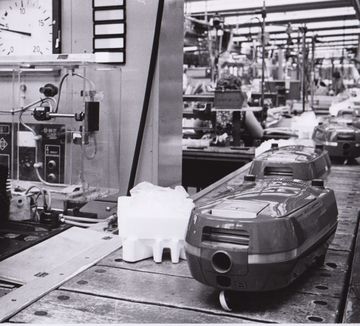
1981 Siemens vacuum cleaners
The vacuum cleaner becomes a design icon
The Siemens VS 5 standard vacuum cleaner has a production output of more than four million. This is followed in 1984 by the Siemens Black Energy, which soon attains cult status with its sophisticated design.
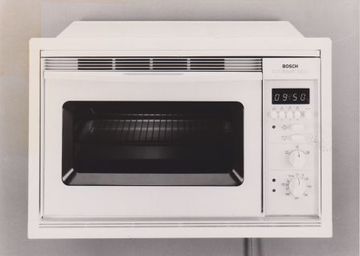
1985 Microwave combination oven
On a wave of success
In the 1980s, the microwave blazes a trail of success in Germany. Cooked quickly, yet still nicely browned, many new appliances combine the microwave with an oven or grill.
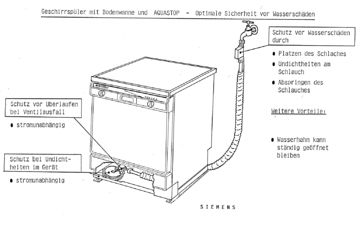
1985 AquaStop
Goodbye to overflowing
AquaStop technology offers 100% protection against water damage caused by washing machines. The patent application is lodged in 1982, with the technology introduced in 1985, for example in the Constructa CONTURA and the Bosch SMS 9022. AquaStop is a pioneering success. In its first year, sales figures exceed production capacity. AquaStop has been a standard in washing machines since 1986 – even among its competitors.
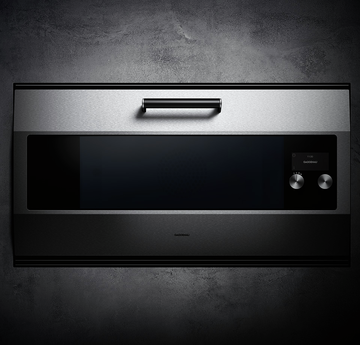
1986 The Gaggenau EB 300 oven. Here the 2016 successor EB 333 at the EuroCucina fair
Full width for roasting
The first 90 cm-wide oven on the European market has a large effective volume of 87 liters and provides space for up to four roasts. The EB 300 becomes an icon. In 2016, the year of its 333rd anniversary, Gaggenau launches the EB 333 as homage to the EB 300. This updated version appears in a more modernized form and functionality, while remaining true to its origins. A distinctive feature is the stainless steel door that reaches across the entire width of the oven.
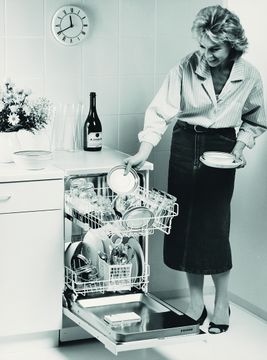
1987 45cm dishwasher
Less is more
The first dishwasher with a width of only 45cm, such as the GV430 series, is the star of the 1987 Domotechnica trade fair. Sales of 45cm dishwashers soon shoot sky high.
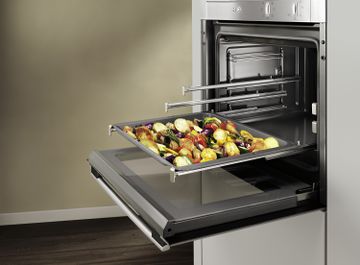
1987 CLOU. Here the 2017 edition
The Clou
The smoothly operating, ball-bearing CLOU from Neff, a tilt-proof, multi-level telescopic oven shelf rail, is launched in 1987.
- Inf dt 10 1987 3.jpg
1987 BSH at the Berlin International Consumer Electronics Fair
Consumer electronics
Entertainment electronics from Siemens: The brand presents the entire range at the International Consumer Electronics Fair in Berlin 1987. Color TVs, video recorders, radio recorders, clock radios, hi-fi systems and world receivers are all state of the art.

1993 Constructa viva washing machine
Fuzzy controls the laundry
The BSH subsidiary Constructa sets new standards for washing machines. Equipped with the fuzzy control system, sensors detect the fill quantity of the machine and can thereby adapt the washing time and spin cycle to the laundry. This technology makes it possible to reduce water and electricity consumption by approximately 50 percent.
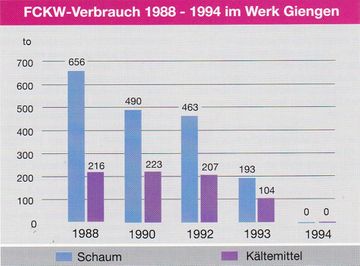
1993 Reduction of cfc consumption in the BSH production
Clean cooling
Sustainable thinking: BSH converts its European production to CFC-free refrigerators and from 1994 also bans any use of CFCs in European BSH refrigerators.
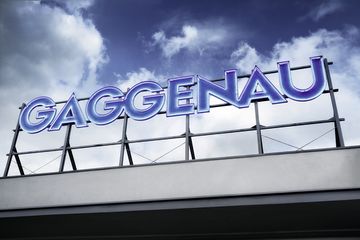
1999 The Gaggenau ED 220 steam oven
Globalization on a plate
A steam oven connected to the water supply creates a new trend – gentle steam cooking. Asian cuisine, in particular, owes its success in the western world to this method.
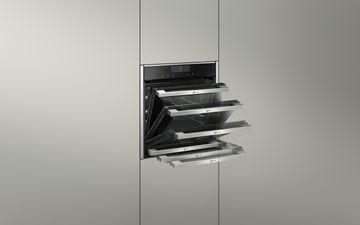
2002 SLIDE & HIDE
More legroom in the kitchen
With a fully retractable oven door, SLIDE & HIDE from NEFF creates space for convenient access to the inside of the oven.
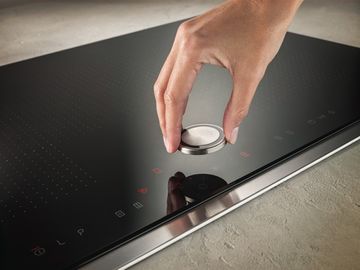
2002 New designs for controls
Quicker switching
Innovative concepts such as TouchControl and slider technology simplify handling and facilitate intuitive operation. In 2003, Neff develops the TwistPad, a detachable magnetic one-button control for stoves that is elegant, safe and easy to clean.

2004 Bosch AquaVario
The smart dishwasher
With AquaVario technology, sensors detect the right water pressure and new cleaning agents. These innovative characteristics make BSH the market leader in dishwashers. New operating concepts such as TouchControl and InfoLight are also introduced.
2006 VarioSpeed dishwashers
Dishwashers “on” speed
Dishwashers are now available with VarioSpeed technology. Full performance at double the speed saves time.
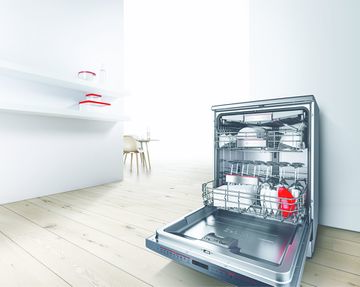
2008 Dishwashers with a zeolite drying system
A world first in energy efficiency
Dishwashers with a zeolite drying system are the most economical yet. This world first makes use of the natural mineral zeolite’s ability for storing moisture and ensures low energy consumption.
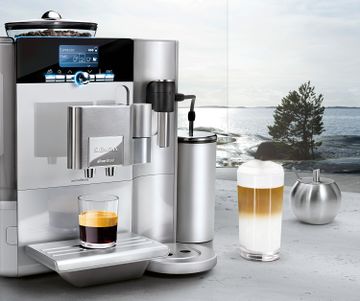
2008 The Siemens EQ.7 premium fully automatic coffee machine
Full-flavor in no time at all
The intelligent heating system in the new premium automatic coffee machine from Siemens guarantees a delightful espresso due to a constantly ideal brewing temperature.
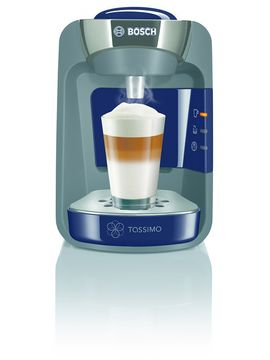
2008 The Tassimo series
Compact multiple beverage machine
The introduction of the Tassimo series revolutionizes coffee brewing with the multiple beverage machines and its so-called T DISCs. The Bosch Tassimo is manufactured in cooperation with the partner Kraft Foods. It not only has the shortest heat-up times, but is also the best energy-saving and most compact appliance on the market.

2009 7-liter dishwasher
A water-saving miracle
The low water consumption of the new 7-liter dishwashers allows for unrivaled efficiency and water conservation. Now that’s sustainable!
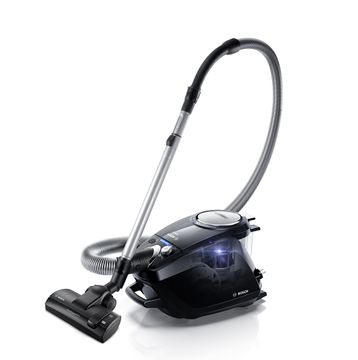
2009 SensorBagless-technology
Bagless “dust catchers”
SensorBagless technology ensures an optimal performance level of floor cleaning even when using bagless vacuum cleaners.
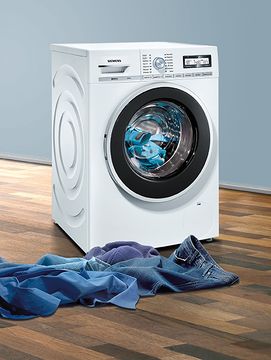
2010 i-DOS dosing system
Properly dosed washing
The automatic i-DOS dosing system allows for to-the-milliliter accurate dosing of detergent and thus reduces water consumption. The new technology is available, for example, in the Siemens iQ 800 premium washing machine. From 2011 onwards, it also comes with Home Connect and easy operation by app – from anywhere.
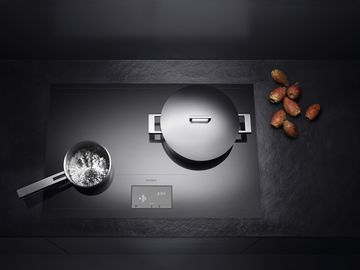
2011 Full-surface induction hob with TFT Touch Display
New standards in user-friendliness
New freedom in the kitchen – a single large cooking surface with full-surface induction allows for pots and pans to be placed anywhere. In addition, the TFT touch display shows the shape, size and position of the cookware.
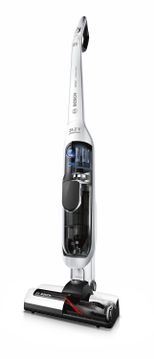
2013 Bosch Athlet hand-held vacuum cleaner
Cordless power pack
The cordless hand-held vacuum cleaner can reach any place where there is dust – no matter where the sockets are. Thanks to its lithium-ion technology, the Athlet has just as much suction power as a conventional Bosch vacuum cleaner.
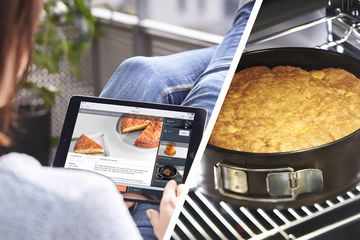
2014 Home Connect
The networked home
In 2011, BSH presents Home Connect. Over the next few years, more and more appliances are connected via the smartphone/tablet app. In 2014, for the first time, BSH ovens and dishwashers come equipped with the Home Connect function.
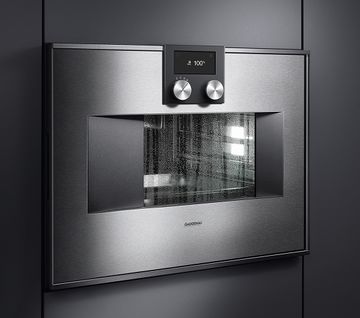
2015 Cleaning system for the Gaggenau 400 series
Ovens are cleaning themselves
As an exclusive world first, Gaggenau presents a fully automatic cleaning system for all 400 series steam ovens with a direct connection to the water supply. The steam chamber is cleaned hygienically with a cleaning cartridge and water.
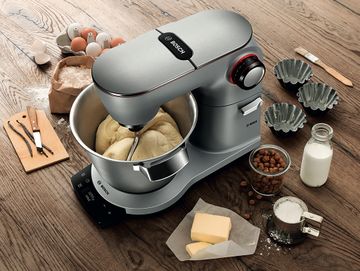
2016 Bosch OptiMUM food processor
The culmination of many years of experience
Functionality, user-friendliness and design – Bosch pours all of its 60 years of experience in food processors into the design of the OptiMUM. With an integrated scale, timer and advanced sensor technology, it takes on more tasks than any Bosch food processor has ever managed before – and thanks to its automatic programs, it does all of this independently.


_klein.jpg)


Notes
- ↑ BSH was founded in 1967 as Bosch-Siemens Hausgeräte GmbH - BSHG for short. In 1998, the name was changed to BSH Bosch und Siemens Hausgeräte GmbH, with the short form BSH. Since the sale of the Siemens shares in BSH to Robert Bosch GmbH the company’s name is now BSH Hausgeräte GmbH, but still BSH for short.